NDEO’s Guest Blog Series features posts written by our members about their experiences in the fields of dance and dance education. We continue this series with a post by Natasha McCandless. Guest posts reflect the experiences, opinions, and viewpoints of the author and are printed here with their permission. NDEO does not endorse any business, product, or service mentioned in guest blog posts. If you are interested in learning more about the guest blogger program or submitting an article for consideration, please click here.
Incorporating student-centered pedagogy in choreographic endeavors
Last fall (2025), I had the pleasure of developing a Dance Pedagogy course for third- and fourth-year students in SUNY Fredonia’s Department of Theatre and Dance. As a lecture/lab practicum, the 15-week course focused on fundamentals of teaching dance forms to ages K-12 in studio and school contexts. A conversation emerged at the end of the semester that I did not expect: remaining student-centered in choreographic endeavors. Resonating beyond the container of the course, I consider how educators accomplish this goal while balancing their own artistic expectations. Developing and setting choreography – whether in classroom or rehearsal spaces – is inherently pedagogical. Yet educators must intentionally account for the priorities of an educational context, namely positioning students’ learning and wellness as primary. How do we accomplish such a task? By attending to the intersection of stated learning outcomes and student agency. This requires a deeply attuned awareness, not only to content, but also to students, environments, and personal and community values.
For the final project of Dance Pedagogy, students created a lesson plan in preparation to teach a 20-minute portion of class, using their choice of dance styles and content. This assignment culminated after several shorter teaching practices engaged throughout the semester. Students received feedback at each teaching opportunity, as well as on the lesson plan prior to teaching the proposed material. Many students chose to teach segments of their own choreography to their peers as the entirety of their 20-minute class section. Almost all of these students received similar feedback after observing them teach:
Consider how much time you need to account for attending to student needs and offering feedback, especially after watching them perform the combination.
What if you stopped the combination earlier to let them really perform, and allow time for you watch? Consider what’s more important: learning the whole combination you prepared, or the stated objective of performing in small groups without the instructor demonstrating?
Several of these students articulated clear learning objectives, but did not manage available class time to achieve the objectives as they pressed through more movement material than their peers could succeed in mastering. The conversation I initiated after everyone completed their projects addressed the need to center students’ experience rather than personal artistic goals. We had previously discussed planning ahead for adjustments based on how students learn in real time, and returned again to this idea as a parting takeaway. Students seemed contemplative, and took this feedback seriously as a point for further reflection. For example, one of the written reflective responses following the project highlighted the rich complexities of teaching and an astute goal of moving beyond the “delivery of material and movement” to a “relational, intentional, and responsive practice.”
In Feltness: Research-Creation, Socially Engaged Art, and Affective Pedagogies (2022), Stephanie Springgay states: “the artist-pedagogue does not mold students into a work of art, as if the students simply become raw materials separate from the pedagogical event” (4). Attending to dancers’ needs demonstrates a sense of care about their lives both in- and outside the pedagogical space. While useful to creative process, this strategy sees dancers’ contribution as more than “raw material,” instead, their role becomes active as participants and co-creators. The work falls on the educator, in the position of formal authority, to engage students skillfully and appropriately. While the young educators in Dance Pedagogy seemed to focus on their choreography – and getting through as much of it as possible – as the primary goal, this reminder serves any and all of us who choreograph alongside students.
One particularly helpful strategy in re-centering students is creating and adhering to learning outcomes for each piece of choreography. In recent experiences choreographing in a higher education context, I set objectives for student growth in each piece. Some examples include: developing community, embodying rhythmic complexity through polyrhythm and polycentrism, exploring musicality within a jazz standard, establishing a clear storytelling arc with comedic elements, building physical stamina, and integrating choreographed details and dynamics into personal characterization. These ideas guide my decisions throughout each rehearsal and across the arc of process, ultimately helping define success using clear terms beyond my personal aesthetic tastes. This requires frequent check-ins – in my own reflection and in conversation with students – to adapt how the objectives are being implemented.
Remembering that stated objectives intersect with students’ abilities and personal agency is also a vital component of remaining student-centered in artistic work. Drawing from adrienne maree brown’s Holding Change (2021), the principle of “invitation goes further than manipulation” influences my approach to engaging dancers as collaborators (16). I use language of invitation during exploratory processes, saying something along the lines of, “this is an invitation, not a requirement,” in regards to choreographic requests whenever possible. I particularly enjoy requesting the dancers’ input based on their felt experiences within a piece. For example, during individual rehearsals with a soloist, I might ask for their input on the piece’s final emotive intent and visual image. While I don’t utilize every idea contributed – and claim final say in my role as facilitator – I have experienced many productive conversations where dancers’ experience inside the piece influences both artistic outcomes and collective growth.
In conclusion, the intersection of learning objectives and student agency feels resonant as I navigate both my own choreographic voice and the needs of students co-creating each work alongside me. In the next iteration of Dance Pedagogy, I plan to re-structure the final project to further highlight the importance of not only naming but executing learning objectives. The principle of adaptation – not only making agency possible, but planning for change – grounds creative work in the ultimate goal of supporting students’ learning and wellness. While productions in particular come with the limitation of tight timeframes, taking a perspective of growth offers valuable insight and intervention and allows students to remain at the center of the experience. This call-to-action continues to resonate through the cycle of teaching, thinking, and creating, in my own practice and in conversation with other educators.
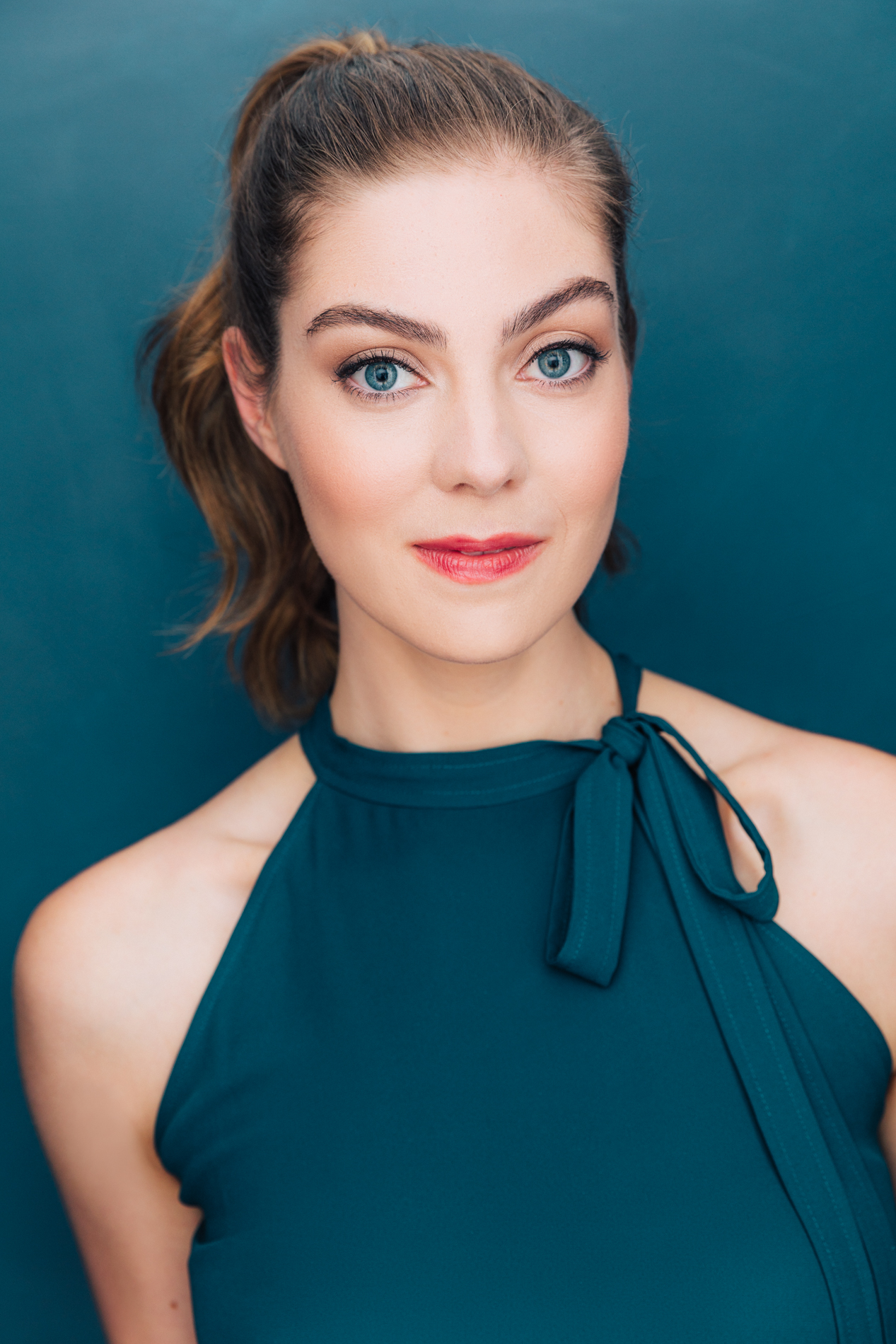
Natasha McCandless is an educator, choreographer, and performer based in Buffalo, NY. She earned her MFA in Dance from the University at Buffalo in 2024, where she won the Excellence in Teaching Award for Graduate Teaching Assistants. Since then, she has taught a broad range of lecture and practice-based courses for a number of universities, including the Boston Conservatory, Niagara University, and SUNY Fredonia. Her research focuses on theories of affect, embodiment, and care with a goal of fostering wellness for dancers in pedagogical space across classroom and rehearsal contexts. Natasha has also had the pleasure of presenting her choreographic work across professional and educational contexts over the past few years, and enjoys performing as part of the regional theater community in Western New York.
-------------------------------------------------------------
About NDEO’s Dance Education Blog
The “Dance Education” blog is brought to you by The National Dance Education Organization (NDEO), a thriving non-profit membership organization that supports YOU as a dance educator! NDEO works with and for dance educators of all backgrounds and in every setting and genre. We work for equitable and accessible dance education for all through advocacy, research, and support for the dance educators who are making a difference for their students. As a membership organization, we rely on dance educators like YOU to join us in this important work! When you become a member of NDEO, you align yourself with our vision of dance education for all. We invite you to become a part of our vibrant community that offers support, resources, advocacy, and research you need to make a difference for yourself and make an impact on our field. Now more than ever, we need to come together to celebrate and share the dynamic, affirming, community-building, transformative power of dance. Join the movement - become a member of NDEO today
Works Cited
brown, adrienne maree. Holding Change: The Way of Emergent Strategy Facilitation and Mediation, AK Press, 2021. ProQuest Ebook Central, http://ebookcentral.proquest.com/lib/buffalo/detail.action?docID=6313690.
Springgay, Stephanie. Feltness: Research-Creation, Socially Engaged Art, and Affective Pedagogies, Duke University Press, 2022.
Photo Credits: Featured image by Mark Duggan, Headshot by Corinne Louie